
MARTIN BLANCO
Buenos Aires, Argentina, 1974
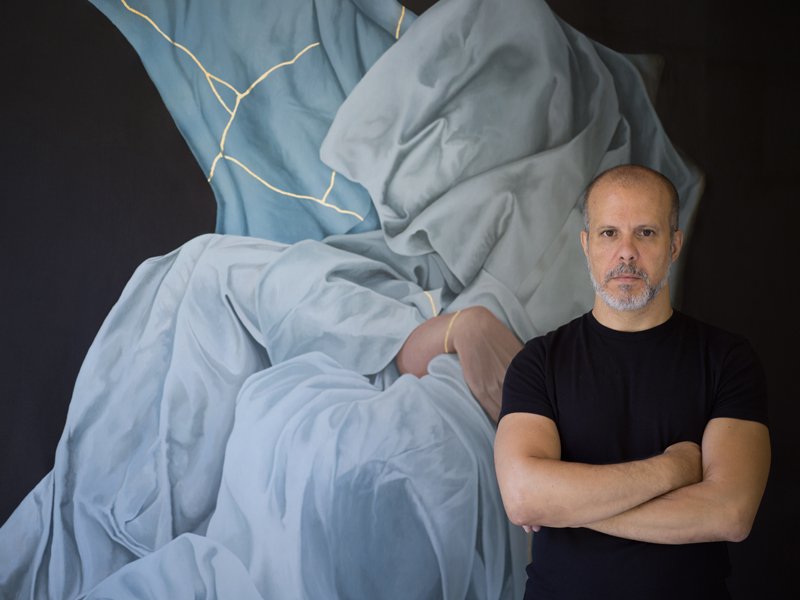
Martin is an internationally exhibited and awarded Digital and Traditional Artist living in the Principality of Andorra, Europe with a Bachelors Degree in Fine Arts.
Experimenting with different techniques and boundaries, Martin has created his own style of creative narrative through Digital Art by mixing photographic manipulation and digital painting. In addition to his digital work, Martin is also dedicated to traditional art, creating detailed graphite drawings and oil paintings that explore both classical and contemporary themes. His mastery of these mediums allows him to express a wide range of ideas, from precise realism to imaginative interpretations, further enriching his artistic practice.
He has won 30 international awards, of which 10 are first prizes in several Drawing and Digital Art contests worldwide, including the award of "Best Comic Book" in the New York Horror Film Festival 2007.
His work has been the subject of a number of solo exhibitions in Argentina, Spain and Andorra and he has participated in more than 50 group and juried exhibitions, including multimedia events in New York (Guggenheim Museum, MoMA Museum), Paris (Louvre Museum), London, Berlin, Los Angeles, Barcelona, Warsov, Florence, Dublin, among others.
Artist Statement
My style is deeply influenced by the culture I’ve been immersed in since my teenage years. Along with my admiration for Renaissance and Baroque art, I’ve also been shaped by horror in all its forms — movies, comics, and books — as well as heavy metal. All of this creates a particular aesthetic and, I suppose, a way of thinking that feels at ease within dense and oppressive atmospheres. Over the years, I’ve softened that aesthetic, incorporating beauty as another characteristic of those characters and environments, to prevent the viewer from feeling uneasy before my work — which, I must admit, was much darker in my early years.
From a strictly aesthetic point of view, the way I use light and shadow is directly connected to the artistic influences that inspire me — particularly Michelangelo, Caravaggio, and Dalí. My understanding of art is close to Michelangelo’s, whose process was not playful but rather tortuous. From Caravaggio, I draw that somber atmosphere of extreme contrasts, which I try to capture not only in the scenography but also in the emotional state of my characters. Dalí and surrealism opened the door to exploring new universes where I can play with compositional rules without losing a realistic aesthetic.
For me, the most important thing is that the artwork develops through a message — that all visual elements, such as composition, color, and contrasts of light and shadow, are subordinated to the way that message is conveyed. When I speak about beauty, I mean that creating a piece solely with the intention of making it beautiful is not enough if it isn’t accompanied by meaning. Beauty is a value that can define things, but not necessarily an intrinsic one.